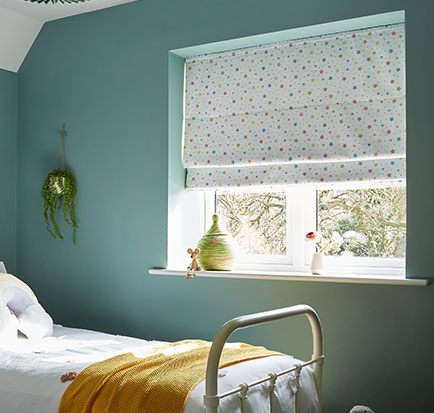
Kitchens: choose fabrics that shrug off cooking
The kitchen is the hardest-working room in the house, and its blinds take the brunt of it: steam from the hob, splashes from the sink, airborne grease that settles on everything. The golden rule is wipeable. A roller blind in a splash-proof fabric copes brilliantly, wiping clean with a damp cloth and standing up to years of condensation without staining.
If you prefer the look of slats, go for a metal venetian or a faux-wood venetian rather than real timber. Faux wood gives you the warmth of a wooden slat but is made of moisture-stable material that won't warp, swell or crack over a kettle or a pan of pasta. Real wooden slats belong in drier rooms. Flame-retardant fabrics are also worth considering near a hob, and we'll flag them where they make sense.
Bathrooms: moisture rules everything
Bathrooms are the most hostile environment in the home for a blind. Daily steam, condensation running down the glass, and long damp spells in winter will destroy anything that isn't built for it. Stick to materials that genuinely don't mind getting damp: vinyl or splash-proof roller fabrics, faux-wood venetians, or wipeable vertical louvres.
Privacy matters too, since bathroom windows are often overlooked. A venetian lets you tilt the slats for privacy while daylight still floods in — handy for a room where you rarely want the window fully bared. Whatever you choose, avoid real wood and delicate weaves; they simply don't survive. Our cleaning and care guide covers how to keep bathroom blinds fresh.
Bedrooms: darkness is the priority
Good sleep starts with a dark room, and the fabric on your window does more for that than anything else. A blackout roller is the simplest route: the fabric itself lets virtually no light through, and fitted generously outside the recess it can get a bedroom impressively dark. Roman blinds with a blackout lining add a softer, more decorative feel while doing the same job.
If you want flexibility as well as darkness, day and night blinds give you a sheer daytime setting for privacy with light, then a closed setting for evenings. For the full picture on getting a room properly dark — including why edge gaps matter — read our blackout blinds guide.
Living rooms: where looks matter most
The living room is where a blind earns its keep visually as well as practically. Roman blinds bring fabric, texture and colour to the window in a way slatted blinds can't, folding into soft pleats that feel closer to soft furnishing than window hardware. Wooden venetians go the other way: crisp, architectural slats in real timber that suit both period terraces and modern builds around Mansfield.
Day and night blinds deserve a mention here too. Their alternating sheer and solid stripes let you soften glare on the television without shutting out the afternoon, then close fully once the lamps go on. If the room gets strong evening sun, a dimout fabric keeps things comfortable without the cave effect of full blackout.
Home offices: kill the glare, keep the light
Anyone who has spent a video call squinting at a washed-out screen knows the home office problem: you need to cut glare without working in the dark. A dimout fabric is the answer — it softens and filters the light rather than blocking it, so the screen stays readable and the room stays pleasant.
A dimout roller is the tidy, affordable choice. Venetians offer something rollers can't: tiltable slats that redirect sunlight up at the ceiling as the sun moves through the day, which is genuinely useful if your desk faces the window. Pleated blinds work well in home offices too, especially on smaller windows.
Conservatories and patio doors: heat and width
Conservatories concentrate two problems: fierce summer heat and lots of glass in uPVC frames. Perfect Fit blinds were practically invented for them — they clip into the window gasket with no drilling, move with tilt-and-turn windows and doors, and never swing about. Paired with pleated fabrics, which are designed to temper heat and glare, they make a conservatory usable on days it would otherwise be a greenhouse.
Patio and French doors are a width problem more than a heat problem. Vertical blinds handle wide spans gracefully — the louvres draw right back for access, tilt for privacy, and cope with sizes that would make a single roller unwieldy. Tracked options run smoothly across even very wide openings.
Loft rooms: don't forget the roof windows
Loft conversions live or die by their roof windows, and an uncovered skylight makes a loft bedroom impossible: light pours in at dawn from directly overhead, and heat builds all afternoon. Purpose-made skylight blinds are built for Velux-style roof windows, running in side channels so the fabric stays put whatever angle the window sits at — an ordinary blind simply flops away from a sloping frame.
For a loft used as a bedroom, choose the blackout version; the side channels have the happy side-effect of reducing the light gaps at the edges. For a loft office or landing, a dimout fabric tames glare while keeping the airy feel that makes lofts so pleasant.
The whole house at a glance — and how to decide for real
| Room | First choice | Also consider |
|---|---|---|
| Kitchen | Splash-proof roller | Faux-wood or metal venetian |
| Bathroom | Vinyl or splash-proof roller | Faux-wood venetian, wipeable verticals |
| Bedroom | Blackout roller | Roman with blackout lining, day & night |
| Living room | Roman or wooden venetian | Day & night |
| Home office | Dimout roller | Venetian, pleated |
| Conservatory | Perfect Fit or pleated | Verticals for doors |
| Patio doors | Vertical blinds | Perfect Fit on uPVC doors |
| Loft room | Blackout skylight blind | Dimout skylight for offices |
A table gets you started, but nothing beats seeing real fabrics against your own walls in your own light. That's what our free home consultation is for: we bring the sample books to you anywhere within twenty miles of Mansfield, talk through each room honestly, and leave you with a no-obligation quote. Call 01623 325 054 or get in touch to book.
Frequently asked questions
Can I use the same blinds throughout the whole house?
You can, and rollers come closest to being a true all-rounder — but you'd be compromising somewhere. A standard fabric that looks lovely in the living room won't survive bathroom steam, and a kitchen-friendly wipeable fabric won't darken a bedroom. Most homes end up happiest mixing two or three types, often in coordinating colours so the house still feels consistent.
What are the best blinds for a kitchen in a hard-water steam-heavy home?
Splash-proof roller fabrics and faux-wood venetians are the two safest bets. Both wipe clean with a damp cloth and neither minds steam or condensation. Avoid real wooden venetians and unprotected weave fabrics near a hob or sink — moisture and grease will spoil them far sooner than they'd wear out anywhere else in the house.
Which blinds work best on patio doors?
Vertical blinds are the classic answer for good reason: they cover wide spans easily, draw fully back for access to the garden, and tilt for privacy without blocking the view. On uPVC doors, Perfect Fit blinds are a neat alternative because they attach to the door itself and move with it, so nothing swings or rattles when the door opens.
Do conservatory blinds really make a difference to the heat?
Yes, a noticeable one. Pleated fabrics designed for conservatories reduce glare and take the harsh edge off solar heat, making the room usable through more of the summer. They also help the space feel less chilly in winter evenings. They won't turn a conservatory into an air-conditioned room, but the difference between covered and uncovered glass is significant.
What should I put on a landing or hallway window?
Landings suit low-maintenance blinds you rarely adjust — a dimout roller or a pleated blind is ideal, softening light and adding privacy without needing daily attention. If the window sits above a stair where a ladder would be awkward, mention it at your consultation; our fitters deal with tall stairwell windows regularly and will advise on the safest, most practical option.