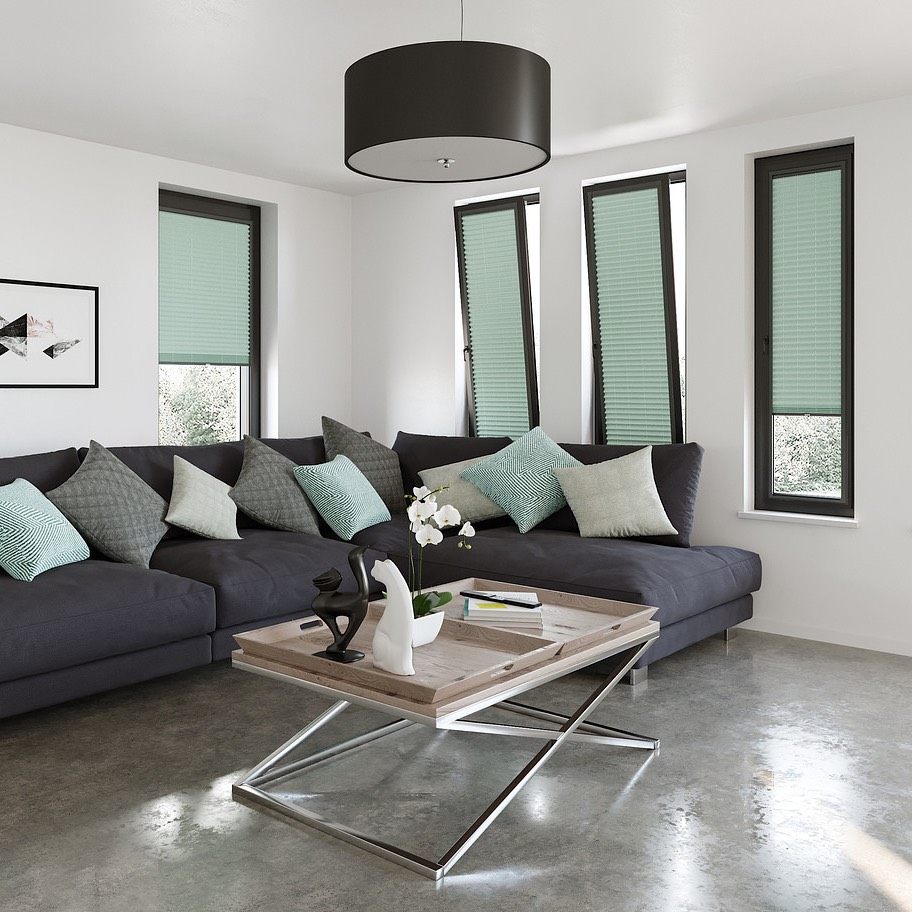
Small when open, smart when closed
A pleated blind is a single piece of fabric permanently creased into fine, even folds. Lower it and the pleats open into a softly textured surface; raise it and the whole blind concertinas into a stack so shallow it almost disappears at the top of the glass. That tiny stack is a genuine advantage — on shallow-silled windows and glazed doors there's often simply no room for the bulkier bundle a venetian or roman leaves behind.
As with everything we supply, your pleated blinds are made to your exact sizes, installed by our own fitters and protected by a 12-month guarantee.
Honeycomb blinds: the energy-saving upgrade
Alongside single-layer pleats we offer honeycomb (cellular) blinds, where two pleated layers are bonded into a row of hexagonal air pockets — look at one side-on and you'll see the honeycomb. Those sealed cells act like double glazing in fabric form: still air is a poor conductor of heat, so the blind slows warmth escaping in winter and blunts solar heat coming in through summer glass.
If your priority is comfort and running costs rather than pure looks — a chilly bedroom over a garage, a conservatory you'd like to use in February — honeycomb is the version to ask about. Blackout cell fabrics exist too, combining insulation with darkness; our blackout guide covers how well they perform.
Built for conservatories and hot glass
Nowhere works a blind harder than a conservatory, and pleated fabrics were practically made for the job. Special heat-reflective backings — often a pearlised or metallic finish facing the glass — bounce a large share of the sun's energy straight back outside before it heats the room, while still letting a soft, even light through. On the flip side, closing the blinds on winter evenings traps an insulating layer against the cold glazing.
Conservatories and glazed extensions are a fixture of the housing stock around Mansfield and Sutton-in-Ashfield, and most of the pleated blinds we fit go into exactly these rooms. For a completely drill-free conservatory installation, pleated fabrics are also available in clip-in frames — see our Perfect Fit blinds page.
Awkward shapes and unusual windows
Because the fabric is light and the pleats can be tensioned on cords, pleated blinds cope with windows that defeat conventional designs: gable ends, sloped and angled frames, and shaped conservatory glazing among them. Tensioned systems hold the blind taut at any position on sloping glass rather than sagging, and free-hanging versions cover standard windows in the usual way. If a window in your home has gone bare for years because nothing seemed to fit it, this is very likely the product that fits it — bring it up when you book a visit and we'll take a look. For sloping roof windows specifically, our skylight blinds page is the one to read.
Fabrics, light control and everyday use
The pleated ranges run from sheer voiles that simply soften glare, through dimouts in a broad sweep of plains and gentle textures, to full blackout and the heat-reflective conservatory specials. Operation is by cord or by a neat tab on tensioned versions, and child-safety fittings come as standard on corded blinds — the details are in our child-safe blinds guide. Day to day they ask for almost nothing: an occasional gentle vacuum with a soft brush keeps the pleats fresh, and our cleaning and care guide covers the rest.
Getting yours measured and fitted
Sloped glazing, shaped panes and tensioned systems all demand accurate measuring, so let us do it: the home consultation is free anywhere within roughly 20 miles of Mansfield, samples come to you, and the written quote includes fitting with no obligation attached. Manufacture typically takes two to three weeks from your 50% deposit, and our fitters install and test every blind before signing the job off under our 12-month guarantee. Not sure whether pleated, roller or Perfect Fit suits your room best? Our room-by-room guide compares them, or call 01623 325 054 and just ask.
Frequently asked questions
What's the difference between pleated and honeycomb blinds?
A pleated blind is a single layer of concertina-folded fabric; a honeycomb (or cellular) blind bonds two pleated layers into hexagonal air pockets. The trapped air makes honeycomb noticeably better at insulating — keeping heat in during winter and out during summer — for a slightly higher price. If energy saving is your goal, honeycomb is worth the difference.
Are pleated blinds good for conservatories?
They're one of the two best options, alongside Perfect Fit versions of the same fabrics. Heat-reflective pleated fabrics bounce much of the sun's energy back through the glass, which takes the sting out of summer afternoons, while closed blinds help hold warmth on winter nights. They also raise into a tiny stack, so your conservatory keeps its views.
Can pleated blinds fit sloping or gable-end windows?
Yes — this is one of their party pieces. Tensioned pleated systems run on side cords that hold the fabric taut at any angle, so they work on sloping conservatory roofs, angled gable glazing and other shaped windows where a hanging blind would swing free. We'll measure the angles properly at your free home consultation.
Do honeycomb blinds really save energy?
They make a measurable difference to comfort. The sealed cells hold a layer of still air against the glass, slowing heat loss through the window in winter and reducing solar gain in summer — the same principle as double glazing, in fabric. Savings depend on your windows and heating habits, but cold rooms feel warmer and conservatories become usable for more of the year.
How long do pleated blinds take from order to fitting in Mansfield?
Around two to three weeks is typical. We start with a free measuring visit anywhere within about 20 miles of Mansfield, you confirm the order with a 50% deposit, and the blinds are made to your exact sizes. Our own fitters then install them — including tensioned systems on sloped glass — and everything carries a 12-month guarantee.