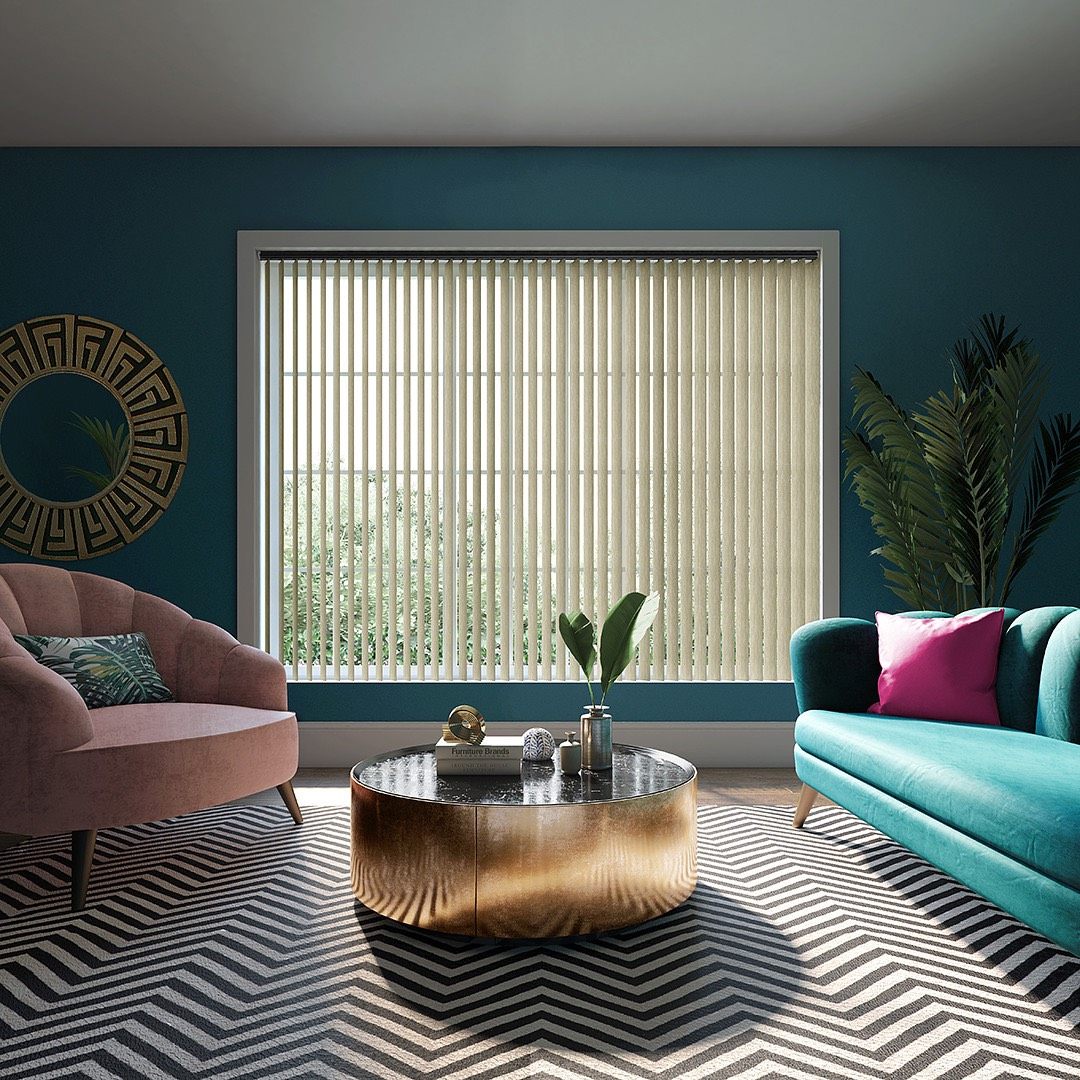
What makes vertical blinds different
Vertical blinds hang as a row of fabric louvres from a headrail, and each louvre rotates on its own carrier. Twist them open and light floods in; angle them and you keep your privacy while still seeing out; draw the whole set to one side and the doorway is completely clear. No other blind gives you that combination of tilt control and a full stack-back on a wide opening.
Every set we fit is made to the millimetre for your window, so the louvres finish at exactly the right length and the headrail spans the opening without ugly joins. Our own fitters install it, and the whole job carries a 12-month guarantee.
Louvre fabrics and headrail finishes
The fabric books we bring to your home cover a genuinely wide spread of louvre options:
- Blackout louvres for bedrooms and rooms where you want serious darkness — our blackout guide explains what to expect from each fabric type.
- Dimout louvres that filter light gently, ideal for lounges and dining rooms.
- Flame-retardant fabrics, a must in many workplaces and a sensible pick at home too.
- Splash-proof louvres that shrug off condensation and wipe clean, suited to kitchens and bathrooms.
- Plains and patterns from quiet neutrals through to decorative designs.
The headrail itself doesn't have to be plain white either. Choose from white, brown, brushed aluminium, anthracite, piano black or champagne gold to match your window frames or door furniture.
Wand or chain — which control suits you?
There are two ways to operate a vertical blind. The traditional setup uses a cord to draw the louvres and a chain to tilt them. The modern alternative is a wand control: one rod that twists to tilt and slides to draw, with no hanging cords at all.
Households with young children usually prefer the wand, because it removes loose cords from the window entirely — the single biggest step you can take towards a safer blind. Where cords and chains are fitted, we install the appropriate safety devices as standard; our child-safe blinds guide covers the details.
Where verticals earn their keep around Mansfield
Plenty of homes in Mansfield and Sutton-in-Ashfield have a set of patio or sliding doors opening onto the garden, and that's the classic vertical blind job: the louvres stack neatly clear of the doorway in summer and close right across it on dark evenings. They're equally at home on:
- Large picture windows, where a single wide blind beats two or three rollers side by side.
- Bay windows, where the headrail can be bent or run in sections to follow the angles.
- Offices and receptions — verticals remain the standard workplace blind for good reason, taming screen glare while keeping rooms bright. For larger premises, see our commercial blinds service.
How long do they last, and how do you look after them?
A well-made vertical blind typically gives you five to ten years of service, depending on how heavily it's used and how it's treated. The louvres themselves need very little: a light run over with the vacuum brush now and then, or a wipe with a barely damp cloth for splash-proof fabrics. If a single louvre ever gets damaged, it can often be replaced without touching the rest of the blind — one of the quiet advantages of the design. There's more upkeep advice in our cleaning and care guide.
From first visit to fitted blind
It starts with a free appointment at your home, anywhere within about 20 miles of Mansfield. We bring the full sample books, measure each opening precisely — patio doors especially benefit from a professional measure, because clearances around handles matter — and leave you a written, no-obligation quote with fitting included. Order with a 50% deposit and your blinds are usually made and ready to hang in two to three weeks. Our fitters level the headrail, hang and check every louvre, and demonstrate the controls before they leave.
Are vertical blinds the right choice for you?
If your priority is a wide opening — patio doors, a big lounge window, a run of office glazing — verticals are hard to beat on function and price. If the window is a standard size and you simply want neat, affordable cover, a roller blind may be all you need. And if you love the idea of adjustable daytime privacy but want a softer, more contemporary look, take a look at day and night blinds. Whichever way you lean, our guide to choosing blinds room by room will help you weigh it up — or just ask us at the home visit.
Frequently asked questions
Are vertical blinds good for patio doors?
They're arguably the best blind for the job. The louvres draw fully to one side so the doorway is unobstructed when you're in and out of the garden, and they tilt for privacy without blocking the light. Because we measure in person, we make sure the louvres clear your door handles and the headrail suits how the doors open.
How long do vertical blinds last?
Expect somewhere between five and ten years from a quality made-to-measure vertical blind, depending on use, fabric and care. Individual louvres can usually be replaced if one is damaged, which extends the life of the blind considerably. Every installation we carry out is also backed by a 12-month guarantee.
What colours do vertical blind headrails come in?
You're not limited to white. Our headrails come in white, brown, brushed aluminium, anthracite, piano black and champagne gold, so the track can match anthracite window frames, dark door furniture or a more traditional interior. We'll bring finish samples to your free home consultation so you can see them against your frames.
Is a wand better than a cord and chain on vertical blinds?
For most family homes, yes. A wand tilts and draws the blind with a single rod and leaves no hanging cords, which makes it the safest option where children or pets are around. Cord-and-chain controls are still available and perfectly good; where they're fitted we always install the required child-safety devices.
Can I have blackout vertical blinds in a bedroom?
Yes — blackout louvre fabrics are available and work well in bedrooms. Bear in mind that a small amount of light can pass between the louvres where they overlap, so a vertical won't be quite as dark as a well-fitted blackout roller. If total darkness matters, tell us at the consultation and we'll recommend the best option for the window.