The golden rule: little and often
Almost all blind damage from cleaning happens when someone tackles years of built-up grime in one heroic session — soaking fabrics, scrubbing slats, bending mechanisms. Dust that's wiped away monthly never gets the chance to bond with kitchen grease or bathroom moisture into the stubborn film that tempts people to scrub.
So the single best habit is boring: run a duster or vacuum brush over your blinds when you clean the room. Five minutes a month beats one desperate deep-clean a year, and it means you'll rarely need anything stronger than a duster. Everything below assumes you'll deal with marks when they're fresh, which is when they come off easily.
Roller and day & night blinds
For a roller blind, start with the vacuum cleaner's soft brush attachment on low suction, working down the fabric with the blind fully lowered. That lifts dust before it gets rubbed in. For marks, what you can do depends on the fabric: wipeable and splash-proof fabrics — the kind we recommend for kitchens and bathrooms — take a damp cloth and a drop of mild detergent happily. Standard fabrics should only ever be spot-cleaned gently with a barely-damp cloth; rubbing hard can leave a pale patch worse than the mark.
Day and night blinds need a lighter touch still, because the sheer stripes are delicate. Dust with the brush attachment and resist wetting them — water marks show badly on sheers.
Vertical blinds
Vertical louvres collect less dust than horizontal slats — gravity is on your side — but they still need attention. Tilt the louvres open and run a duster or vacuum brush down each one, top to bottom, supporting the louvre with your other hand so you don't strain the hangers.
Some vertical fabrics are wipeable and will take a damp cloth on marks; many are stiffened fabrics that don't like water at all, which can leave tide marks or soften the stiffening. If you're unsure which yours are, test somewhere invisible first, or ask us — we can tell you what a fabric will tolerate. Avoid machine-washing stiffened louvres, whatever the internet says: they rarely hang straight again. While you're there, check each louvre is properly seated in its hanger and the bottom weights and chains are intact.
Venetians: metal, faux wood and real wood
Three materials, three rules.
- Metal venetians are the easy ones: dust regularly, and wipe with a damp cloth when they need more. Close the slats one way, wipe, tilt them the other way, wipe again. In kitchens a drop of washing-up liquid in the water deals with grease film.
- Faux-wood venetians are just as forgiving. The slats are moisture-stable, so a damp cloth is fine — which is exactly why we recommend them over real wood for kitchens and bathrooms.
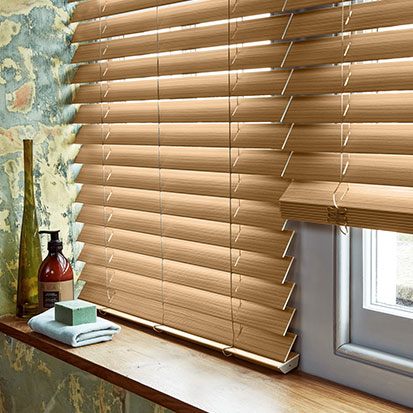
- Real wooden venetians are the exception: dry dusting only. Water raises the grain, marks the lacquer and can warp slats over time. A soft duster, a microfibre cloth or the vacuum brush is all they should ever meet. Treat them like furniture, because that's what they are.
Romans, pleated blinds and shutters
Roman blinds are soft furnishing at the window, and want treating as such. Vacuum on low suction with the brush attachment, following the folds, and spot-clean marks carefully. Never soak or wash a roman: the face fabric, lining and stiffening rods can shrink or distort at different rates, and the blind may never hang square again.
Pleated blinds ask even less — a soft, dry duster or a gentle pass with the brush attachment. Keep water away from pleated fabrics; the crisp pleats are the whole point, and moisture relaxes them.
Shutters are the low-maintenance champions. Painted or stained solid panels and louvres just need dusting, with an occasional wipe from a well-wrung cloth. It's one of the quiet reasons people fall for them.
Dos and don'ts at a glance
| Do | Don't |
|---|---|
| Dust or vacuum (soft brush, low suction) monthly | Let years of grime build up, then scrub |
| Deal with marks while they're fresh | Rub hard at dried stains on standard fabrics |
| Use a damp cloth on wipeable, splash-proof, metal and faux-wood surfaces | Put any water near real wood, romans, pleated fabrics or sheers |
| Test cleaning methods somewhere invisible first | Machine-wash or soak stiffened louvres and blind fabrics |
| Support slats and louvres while cleaning them | Lean on slats or force a stiff mechanism |
| Ask us what your fabric will tolerate | Use bleach, solvents or abrasive cleaners on anything |
Making blinds last — and knowing when they're done
Beyond cleaning, longevity mostly comes down to gentle operation. Use the controls rather than pulling on the fabric or slats, don't force a mechanism that's gone stiff, and keep an eye on small failures — a slipped louvre hanger or a fraying cord is a cheap fix early and a replacement blind late. Well-kept vertical blinds, for instance, typically give five to ten years of daily service, and other types are similar when they're looked after.
That said, there's a point where replacement beats cleaning honestly: fabrics sun-bleached in streaks, stains that have chemically bonded with the fabric, warped or snapped slats, yellowed vinyl, or mechanisms whose spare parts no longer exist. Cleaning can't undo any of those — and a blind limping past its tenth birthday often predates modern child-safety standards too, which our child safety guide covers.
When it's time, we'll measure up for free
If you've read this far holding a cloth and a lost cause, take the hint kindly: some blinds have simply given their years. When one of yours is ready for retirement, our free home consultation makes replacing it painless — we bring fabric samples to your door anywhere within twenty miles of Mansfield, measure precisely, and fit the new blind ourselves with a 12-month guarantee. We'll also happily point you towards the wipeable, hard-wearing fabrics that make the next decade of cleaning easier. Call 01623 325 054 or book a visit.
Frequently asked questions
Can I put vertical blind louvres in the washing machine?
We'd advise against it. Most vertical louvres are stiffened fabrics, and machine washing softens the stiffening so they come out limp, creased and often unable to hang straight again. Regular dusting plus careful spot-cleaning on wipeable fabrics is the safe routine. If louvres are too far gone for that to help, replacement louvres or a new blind is usually the more satisfying answer.
How do I clean wooden venetian blinds without damaging them?
Keep them dry — that's the whole secret. Dust the slats regularly with a soft cloth, duster or the vacuum's brush attachment, tilting the slats each way to reach both faces. Never use a wet cloth or spray cleaner on real wood, as moisture marks the finish and can warp the slats over time. For kitchens and bathrooms, faux wood exists precisely so you can wipe it.
How often should blinds be cleaned?
A light dust or vacuum once a month keeps most blinds in good order, with kitchen and bathroom blinds benefiting from a slightly closer eye because grease and moisture build invisibly. Marks are best dealt with as soon as they happen, whatever the fabric. Little and often genuinely is the whole strategy — blinds maintained this way rarely ever need a deep clean.
There's a stain on my roller blind that won't come out. What now?
Try gentle spot-cleaning with a barely-damp cloth and mild detergent if the fabric is wipeable, but stop if the mark isn't lifting — harder rubbing tends to spread the stain or leave a pale scuffed patch that looks worse. Old stains that have bonded with the fabric are usually permanent. At that point it's worth weighing the cost of a replacement blind against living with it.
How long should a good blind last?
With basic care, five to ten years of daily use is typical for vertical blinds, and rollers, venetians and romans are in similar territory — often longer in bedrooms and quieter rooms. Sun exposure, steam and heavy-handed operation are what shorten a blind's life most. When fabrics fade in streaks or mechanisms start failing, replacement is usually more economical than fighting on.